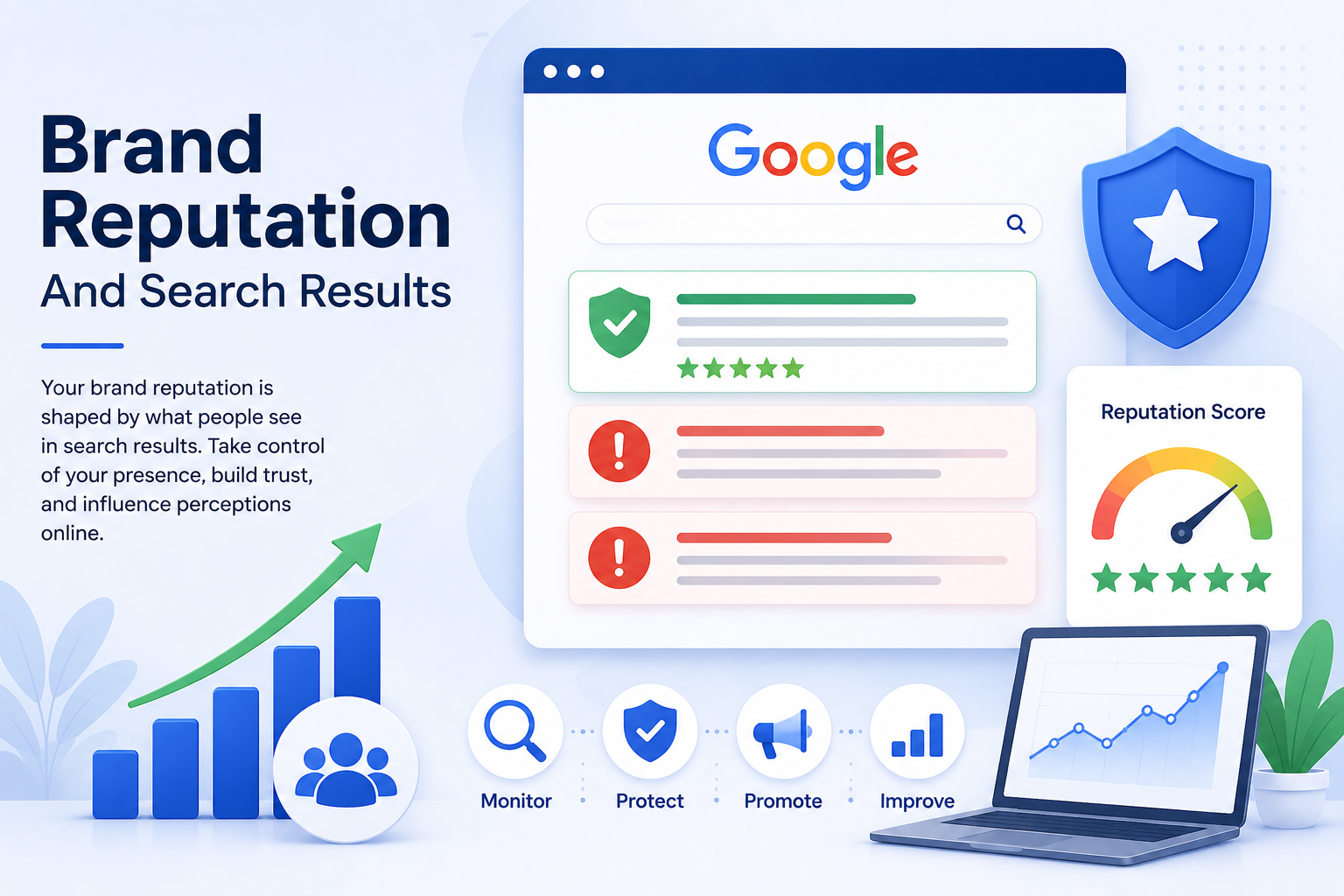
Brand reputation is one of the most valuable assets for any business. In the past, people learned about a brand through word of mouth, advertisements, or direct experience. Today, search results play a major role in shaping how people see a company. Before buying a product, booking a service, applying for a job, or choosing a business partner, many people search the brand name online.
What they see on the first page of Google can create trust or doubt within seconds. Positive reviews, useful content, strong social media profiles, and good news articles can improve confidence. On the other hand, negative reviews, complaints, old controversies, or misleading information can damage the brand image.
This is why brand reputation and search results are closely connected. A brand is no longer judged only by what it says about itself. It is also judged by what search engines show about it.
What Is Brand Reputation?
Brand reputation means how people think and feel about a business. It is the public opinion created through customer experience, product quality, service support, online reviews, media coverage, social media activity, and search engine results.
A strong brand reputation helps people trust your business. It shows that your company is reliable, professional, and worth choosing. A weak reputation creates doubt and can make potential customers move to competitors.
For example, if someone searches your brand name and finds positive customer reviews, helpful blog posts, updated business profiles, and professional social media pages, they are more likely to trust you. But if they find complaints, negative news, or unanswered reviews, they may hesitate.
Why Search Results Matter For Brand Reputation
Search results are often the first impression of a brand. Even before visiting your website, people may judge your business based on what appears in Google Search.
Search results can affect many areas of a business, including customer trust, sales, lead generation, hiring, investor confidence, partnerships, and public image. If your brand search results look clean and professional, people feel safer engaging with you. If the results look negative or confusing, they may lose interest.
The first page of Google is especially important because most users do not go beyond it. This means the top results can strongly influence public opinion about your brand.
Types Of Search Results That Affect Brand Image
Many types of online content can appear when someone searches your brand name. Each result can support or harm your reputation.
These may include your official website, Google Business Profile, customer reviews, social media pages, news articles, blog posts, videos, directory listings, complaint websites, forum discussions, and competitor comparison pages.
Positive results help build trust. Negative results create concern. Outdated or incorrect results can also confuse people and reduce confidence in your brand.
How Negative Search Results Can Harm A Brand
Negative search results can affect a brand in many ways. A bad review, complaint page, scam accusation, or negative news article can make people question your credibility.
This can lead to fewer website visits, lower sales, fewer enquiries, poor customer confidence, and reduced brand loyalty. It can also affect hiring because job seekers may search your company before applying. Investors and business partners may also check your online reputation before making decisions.
Even if the negative result is old or no longer accurate, it can still influence people if it appears high in search results.
Why Positive Search Results Build Trust
Positive search results act like proof that your brand is active, reliable, and trusted by others. When people see good reviews, helpful articles, strong social profiles, and positive media mentions, they feel more comfortable choosing your business.
Good search results show that your brand is transparent and professional. They also help customers understand your products, services, values, and achievements.
For example, a brand with a well-optimized website, active social media pages, positive customer feedback, and useful blog content looks more trustworthy than a brand with limited or negative online visibility.
How To Improve Brand Reputation In Search Results
Improving brand reputation takes time, but it can be done with a consistent strategy. The goal is to make sure that positive, accurate, and useful content appears when people search your brand name.
1. Optimize Your Official Website
Your website should be the strongest result for your brand name. Make sure your homepage, about page, service pages, contact page, and blog content are properly optimized.
Use your brand name naturally in page titles, headings, meta descriptions, image alt text, and website content. Keep your website updated with accurate information about your services, team, achievements, and contact details.
A strong website helps search engines understand your brand and gives users a trusted source of information.
2. Create Helpful Brand Content
Content is one of the best ways to improve search results. Publish blogs, guides, case studies, FAQs, company updates, customer success stories, and industry insights.
This content helps your brand rank for important search terms and gives people useful information. It also shows that your business is active and knowledgeable.
Avoid writing only promotional content. Focus on solving customer problems and answering common questions.
3. Manage Online Reviews
Online reviews can strongly affect brand reputation. Many people read reviews before choosing a business. Positive reviews build trust, while negative reviews can create doubt.
Encourage happy customers to leave honest reviews. Respond to reviews professionally, whether they are positive or negative. A polite response to a negative review shows that your brand listens and cares about customer experience.
Never ignore repeated complaints. Use them as feedback to improve your service.
4. Build Strong Social Media Profiles
Social media profiles often appear on the first page of Google for brand searches. Platforms like LinkedIn, Facebook, Instagram, X, and YouTube can help create a strong online presence.
Keep your profiles updated with correct business information, brand visuals, posts, videos, and customer engagement. An inactive or incomplete profile can make your brand look less trustworthy.
Consistent branding across all platforms also helps people recognize your business easily.
5. Publish Positive News And Updates
Positive news can improve your brand image in search results. Share updates about product launches, awards, partnerships, events, milestones, social work, or business achievements.
Press releases and media coverage can help create authority and trust. They also give search engines more positive content to show for your brand name.
6. Fix Incorrect Or Outdated Information
Sometimes, search results show old addresses, outdated services, wrong contact details, or old news. This can confuse customers and harm trust.
Regularly check your brand search results and update incorrect information wherever possible. Contact website owners if they are showing wrong details. Update your business listings and social profiles with current information.
7. Handle Negative Content Carefully
If negative content appears in search results, do not panic or respond emotionally. First, check whether the content is true, false, outdated, or harmful.
If it is a review, respond politely and offer a solution. If it is incorrect information, contact the website owner and request a correction. If it includes private or legally harmful content, you may explore removal options through the website, search engine, or legal support.
8. Use SEO Suppression When Removal Is Not Possible
Sometimes negative content cannot be removed. In that case, SEO suppression can help.
SEO suppression means creating and ranking positive content above the negative result. Over time, this can push the negative result lower in search results, where fewer people will see it.
This may include publishing blog posts, improving social profiles, creating videos, building business listings, earning positive media mentions, and strengthening your website authority.
Quick Overview
| Factor | Impact On Brand Reputation |
|---|---|
| Positive reviews | Builds customer trust |
| Negative news | Can reduce confidence |
| Active social media | Improves brand visibility |
| Optimized website | Strengthens brand control |
| Customer complaints | May damage credibility |
| Press releases | Builds authority and trust |
How Often Should You Monitor Search Results?
Brands should monitor search results regularly. A monthly check is useful for small businesses, while larger brands may need weekly or daily monitoring.
Search your brand name, founder name, product names, and common complaint-related keywords. This helps you find reputation issues early and respond before they grow bigger.
You can also set alerts for your brand name so you know when new content appears online.
Final Thoughts
Brand reputation and search results are deeply connected. What people see online can shape their opinion before they contact your business. Positive search results can build trust, increase sales, and support long-term growth. Negative or outdated results can create doubt and reduce opportunities.
To protect your brand, focus on building a strong website, creating helpful content, managing reviews, keeping social profiles active, publishing positive updates, and monitoring search results regularly.
A good reputation does not happen overnight. It is built through consistent action, honest communication, and strong online visibility. When your search results reflect the best side of your brand, people are more likely to trust and choose your business.
FAQs
1. What is brand reputation in search results?
Brand reputation in search results means how your business appears when people search your brand name online. It includes your website, reviews, social media pages, news articles, blogs, and customer feedback.
2. Why are Google search results important for a brand?
Google search results are important because they create the first impression. If people see positive results, they may trust your brand. If they see negative reviews or complaints, they may avoid your business.
3. How can a brand improve its search results?
A brand can improve search results by optimizing its website, publishing helpful content, managing reviews, updating social media profiles, creating positive news, and fixing outdated information.
4. Can negative search results be removed?
Some negative results can be removed if they are false, outdated, private, or violate platform policies. If removal is not possible, brands can use SEO suppression to push negative results lower.
5. How often should a brand monitor search results?
A brand should monitor search results at least once a month. Larger businesses or brands with high public visibility may need to check weekly or even daily.
Leave a Reply