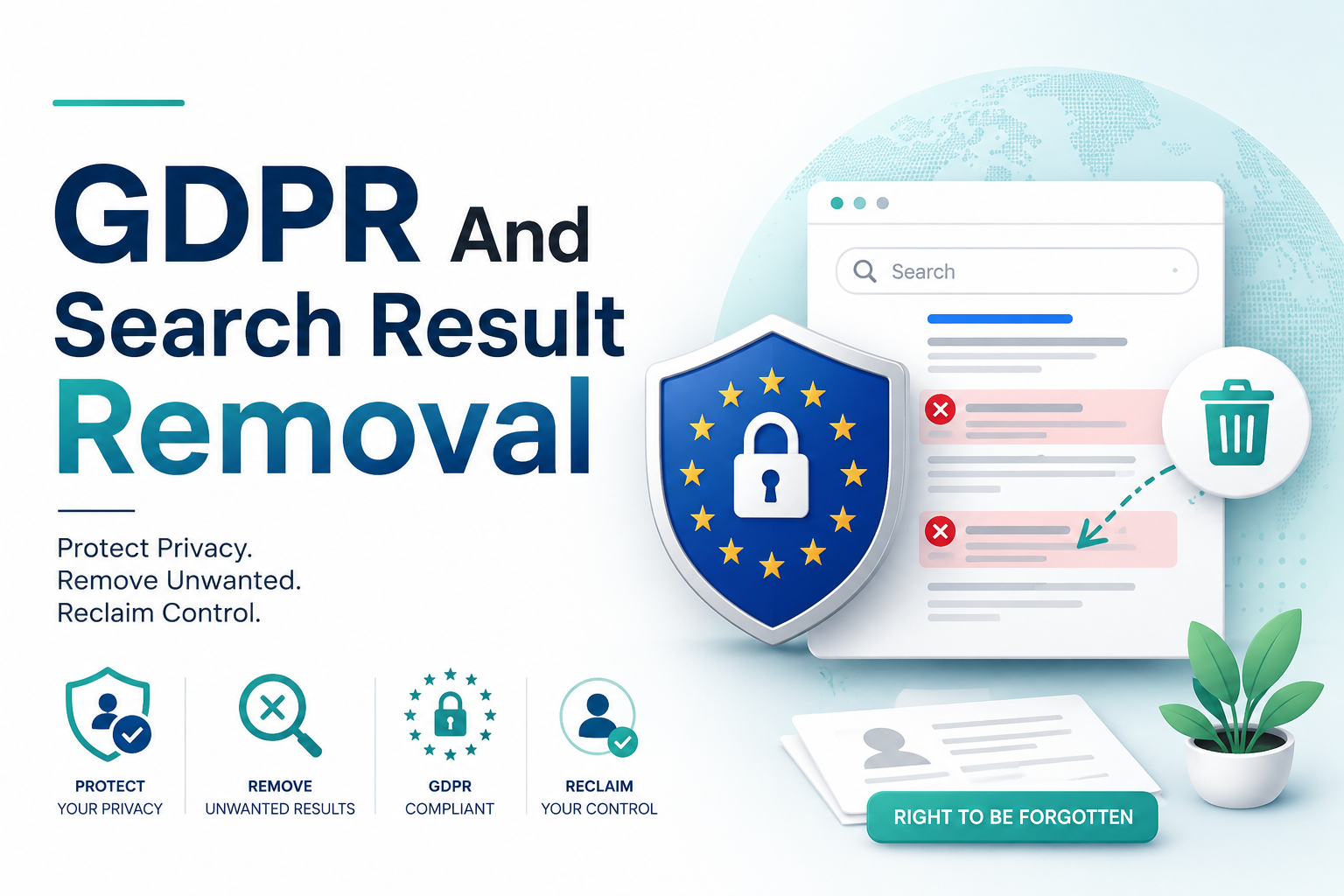
Personal data can haunt online search results long after its relevance fades. Under GDPR, individuals now have the legal right to request removal of links tied to their names, reshaping how search engines like Google handle privacy requests. This introduction examines the regulation’s core provisions, the criteria search engines must apply when evaluating delisting demands, and the practical challenges organizations face in balancing transparency with compliance.
GDPR Overview
The EU’s General Data Protection Regulation (GDPR), effective since May 25, 2018, imposes fines up to EUR20 million or 4% of global annual turnover, whichever is higher, for non-compliance. This regulation governs how organizations handle personal data across digital platforms and search services.
GDPR applies to any organization processing EU residents’ data, regardless of where that organization is located. Companies outside Europe must follow these rules when their services target or monitor individuals in the EU. This broad reach affects search engines that index and display personal information worldwide.
Six lawful bases support data processing under GDPR. Consent allows processing after explicit user approval, such as a user agreeing to appear in search results. Contract applies when data handling is necessary to fulfill an agreement with the individual. Legal obligation covers situations where law requires data retention, like tax records. Vital interests justify processing to protect someone’s life. Public task relates to official functions performed by public bodies. Legitimate interests permit processing when benefits outweigh privacy risks, though organizations must conduct balancing tests.
Public authorities and organizations conducting large-scale monitoring must appoint Data Protection Officers. These officers oversee compliance efforts and advise on privacy matters. The European Data Protection Board issues guidelines on administrative fines. National supervisory authorities, such as the UK’s ICO and France’s CNIL, enforce GDPR rules within their jurisdictions and handle complaints about data processing activities.
Right to Be Forgotten
Established by the Court of Justice of the European Union in Google Spain SL v. Agencia Espaola de Proteccin de Datos (2014), the Right to Be Forgotten allows EU residents to request removal of search results linking to personal information.
This court ruling created a legal framework that requires search engines to balance individual privacy rights against the public interest in accessing information. The decision marked a significant shift in how EU law treats online personal data.
Individuals gained the ability to ask for certain links to disappear from search results when those links contain outdated or inaccurate details. Search engines must evaluate each request based on specific criteria that weigh privacy concerns against information access needs.
The ruling established that data controllers operating search engines bear responsibility for processing personal data. This obligation extends to results appearing in their indexes even when the original content remains available on source websites.
Legal Basis
Article 17 of GDPR codifies the Right to Be Forgotten, requiring data controllers to erase personal data without undue delay when consent is withdrawn or processing lacks lawful basis.
Six specific conditions trigger valid erasure requests. These include consent withdrawal, data that is no longer necessary for the original purpose, objection to processing, unlawful data handling, legal obligations to delete information, and data collected from minors without proper authorization.
CJEU case law has clarified how courts interpret public interest exceptions. Journalistic publications often receive protection when they serve legitimate reporting functions. Politicians and convicted individuals face different standards depending on the nature of the information and its relevance to public discourse.
Data controllers must respond to valid requests within 30 days. They also carry an obligation to notify third parties who process the same data about any successful erasure decisions. This notification requirement ensures consistent application of removal decisions across different platforms.
Scope of Application
The Right to Be Forgotten applies exclusively to search engine results displayed in EU member states, not to global search indexes or source websites themselves.
The 2019 CJEU ruling in Google v. CNIL confirmed that search engines need only delist results within EU domains. A French citizen’s request might affect google.fr and google.de without impacting google.com results shown to users outside Europe.
Source websites retain their original content regardless of delisting decisions. The right covers only name-based searches and does not extend to other identifying information such as email addresses or phone numbers.
This territorial limitation reflects the balance between privacy protection and global information access. Search engines must implement geo-specific filtering while maintaining their broader indexes for users in regions without equivalent legal requirements.
Search Engine Obligations
Search engines function as data controllers when they display personal data within search results. They process information from across the web and determine how it appears to users worldwide.
Google receives approximately 1,000 delisting requests daily and has processed over 1.2 million requests since the 2014 ruling, according to its transparency reports. This volume demonstrates the ongoing demand for search result removal under GDPR provisions.
Search engines must establish mandatory response mechanisms for each erasure request received. They evaluate these submissions against legal standards established by the CJEU in the Google Spain case.
Each request triggers a formal review process where the search engine examines the specific URLs and the nature of the personal data involved. The company must respond within established timeframes set by EU law.
Delisting Criteria
Google evaluates delisting requests against 21 published criteria including relevance of information to the data subject’s current situation, public role of the individual, and accuracy of the information. These factors guide every decision about whether results should remain accessible.
Several elements receive particular weight during assessment. The sensitivity of data matters significantly when medical records or criminal convictions appear in results. Time elapsed since publication also influences outcomes, as older information may carry less current relevance.
Public interest in retaining access weighs against individual privacy claims. Professional relevance and journalistic purpose receive separate consideration when evaluating news articles or official records.
Google maintains a team of 25 or more specialists who conduct manual review of each request. These reviewers assess submissions against the established criteria and determine whether de-indexing is appropriate for specific URLs.
Balancing Rights
Search engines must conduct a balancing test weighing the data subject’s privacy rights against the public’s right to access information, with special consideration for public figures and matters of public interest. This assessment ensures neither right receives automatic priority over the other.
The EDPB guidelines establish clear steps for this evaluation. First, determine whether the individual qualifies as a public figure such as politicians, celebrities, or business leaders. Next, assess whether the information relates directly to their public role or activities.
Journalistic value of the original content receives careful consideration during review. The data subject’s current public visibility also factors into the final determination about whether results should remain indexed.
Case examples illustrate these distinctions. Results about a CEO’s corporate fraud conviction typically remain accessible due to ongoing public interest. By contrast, a private individual’s decade-old bankruptcy filing may qualify for delisting when it no longer serves legitimate purposes.
The Article 29 Working Party guidelines on implementing the Google Spain ruling provide additional direction for these assessments. Search engines apply these principles consistently across different types of erasure requests.
Request Process
Individuals submit delisting requests directly through Google’s online form at google.com/webmasters/tools/legal-removal-request?complaint_type=rtbf, requiring identity verification and specific URLs to be evaluated. The process begins with locating the exact search results that contain personal data through a standard search query. Once identified, users must provide clear reasoning for each URL removal request.
Next, applicants complete the official removal request form with their details and supporting documentation. Identity verification requires uploading government issued identification to confirm the requester is the actual data subject. Each URL must be listed individually with an explanation of why the content violates privacy rights under EU law.
Search engines acknowledge receipt of requests within 48 hours of submission. The evaluation period typically spans 30 days, during which teams assess whether the content meets the criteria for search result removal. Applicants receive notification of the decision along with information about appeal options if the request is denied.
Alternative platforms maintain separate submission procedures for similar requests. Bing accepts privacy complaints through its webmaster tools portal at bing.com/webmasters/tools/eu-privacy-request. DuckDuckGo takes a more limited approach to delisting compared to larger search providers, focusing primarily on direct compliance requirements rather than broad Right to be Forgotten claims.
Challenges and Limitations
The Right to Be Forgotten faces enforcement challenges including the ‘right to be forgotten but not erased’ paradox where source content remains accessible through non-name searches and direct website visits.
Jurisdictional conflicts create ongoing difficulties for data controllers. The 2019 CJEU ruling sparked debate over whether delisting should apply globally or remain limited to EU territories. This tension leaves search engines balancing EU law requirements against different legal standards in other regions.
Verification difficulties arise when individuals lack official identification documents. Data subjects must prove their identity to submit valid erasure requests, yet many people cannot easily provide such documentation. This barrier prevents some individuals from exercising their privacy rights effectively.
Inconsistent application appears across different search platforms. Each search engine maintains separate review processes and decision criteria for URL removal. This variation creates uncertainty for individuals seeking consistent search result removal across multiple services.
The Streisand effect occurs when delisting efforts draw renewed attention to specific content. Public discussion about removal requests can increase visibility rather than reduce it. This outcome undermines the intended privacy protection.
Enforcement gaps emerge when content appears on non-compliant websites or through archival services. Even successful delisting from search indices leaves source material accessible elsewhere. Supervisory authorities struggle to address these distributed copies effectively.
The French CNIL issued a EUR100,000 penalty against Google in 2019 for inadequate delisting transparency. This case highlighted how data protection authorities enforce compliance when search engines fail to provide clear information about their removal processes.
Impact on SEO
A single delisting request can remove up to 20+ URLs from search results, fundamentally altering a brand’s search visibility and requiring reputation management strategies beyond traditional SEO tactics. When search result removal occurs under GDPR provisions, the affected pages disappear from indexed results and cause immediate drops in organic reach.
Research suggests that delisted URLs experience significant reductions in impressions according to Search Console data. Brands must then rely on brand-owned properties such as official websites, Wikipedia pages, and LinkedIn profiles that cannot be removed through erasure requests.
Companies shift their keyword strategy away from individual names toward company names and product terms. This adjustment helps maintain visibility even when personal data appears in search results through Right to be Forgotten mechanisms.
The demand for specialized services has grown with reputation SEO agencies providing delisting prevention strategies. High-risk individuals also invest in paid suppression campaigns on Google Ads to counter negative visibility from remaining indexed content.
Compliance Best Practices
Organizations should implement a delisting response protocol including a dedicated privacy team, request tracking system, and 24-48 hour initial response SLA to meet GDPR’s ‘without undue delay’ requirement. Data controllers must establish clear procedures for handling requests related to search result removal. This approach ensures timely responses while maintaining compliance with EU law.
A data retention policy should include automatic deletion triggers at defined intervals based on data category. Different types of personal data require different retention periods depending on their purpose and legal obligations. Data minimization principles help reduce the volume of information stored in search indexes over time.
Quarterly privacy impact assessments should cover all data processing activities using established templates from regulatory bodies. These evaluations identify potential risks associated with delisting decisions and search index management. Regular reviews support ongoing compliance with data protection requirements across different jurisdictions.
Consent management platforms enable granular tracking of user preferences with detailed audit logs for accountability purposes. Data subject rights portals allow individuals to submit requests through verified accounts with appropriate identity verification steps. These systems streamline the process for handling erasure requests and support transparency in decision making.
Customer service teams require training on processing delisting requests with documented procedures and escalation paths. Requests must reach the appropriate privacy personnel quickly to meet regulatory timeframes. A delisting request register documents decision rationale, approval rates, and outcomes for potential supervisory authority review.
Annual compliance audits by independent third parties help verify adherence to GDPR standards and identify areas requiring attention. These reviews examine how organizations balance privacy rights with public interest considerations in search result removal cases. Documentation supports accountability when facing regulatory inquiries about data processing practices.
Leave a Reply