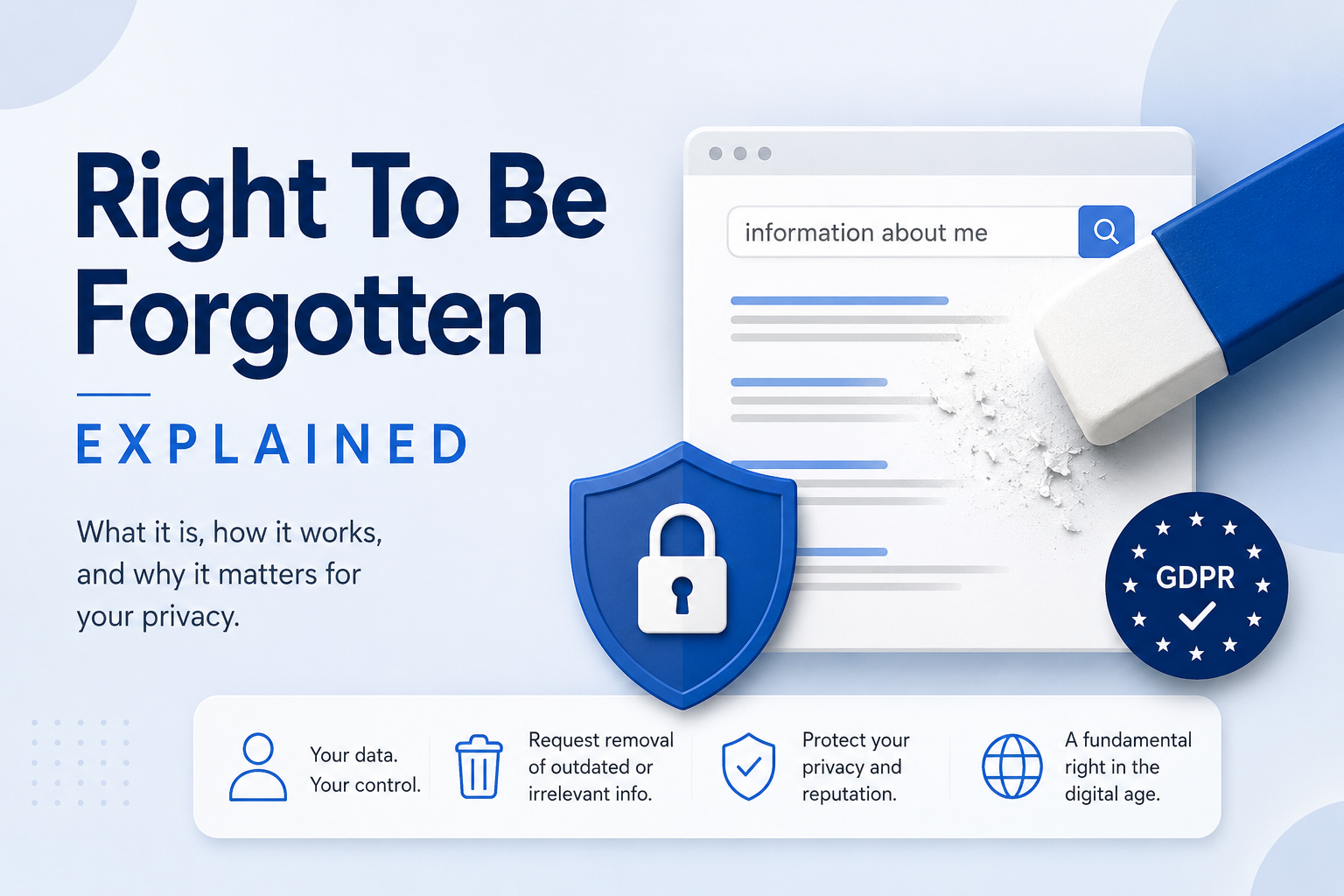
he Right to Be Forgotten is a privacy concept that allows people to request the removal of certain personal information from search results or online platforms. It is mainly used when information is outdated, inaccurate, irrelevant, excessive, or harmful to a person’s privacy.
In simple words, it gives people a way to reduce the visibility of personal information online. This does not always mean the content is deleted from the internet. In many cases, it means the content may be removed from search engine results, making it harder for people to find.
What Is The Right To Be Forgotten?
The Right to Be Forgotten means a person can ask search engines or websites to remove links or content that affects their privacy. This right became widely known in Europe after a major legal decision involving Google and data protection laws.
It is commonly connected with privacy laws such as the General Data Protection Regulation, also known as GDPR. Under these rules, people may request removal of personal data in certain situations.
The goal is to give individuals more control over their online identity and personal information.
Why Is The Right To Be Forgotten Important?
The internet stores information for a long time. A news article, old profile, public record, photo, or personal detail can remain searchable for years. Even if the information is no longer relevant, it may still affect a person’s job, business, relationships, or reputation.
For example, an old article about a minor issue may continue to appear when someone searches a person’s name. Even if the person has moved on, the search result may still create a negative impression.
The Right to Be Forgotten helps balance two important things: personal privacy and public access to information.
What Type Of Information Can Be Removed?
Not every piece of information can be removed. Usually, removal may be possible when the information is:
- Outdated
- Inaccurate
- Irrelevant
- Excessive
- Misleading
- Personal or sensitive
- No longer necessary
- Harmful to privacy
Examples may include old personal details, outdated search results, private contact information, old images, irrelevant articles, or personal data published without a strong public interest.
However, removal is not guaranteed. Search engines and websites review each request before making a decision.
What Information May Not Be Removed?
The Right to Be Forgotten does not apply to everything. Some information may remain online if it is important for public interest.
For example, information may not be removed if it involves:
- Public safety
- Legal matters
- Public officials
- Serious crimes
- Professional misconduct
- Newsworthy events
- Freedom of expression
- Historical records
- Public interest reporting
If the information is still relevant and important for the public to know, a removal request may be rejected.
How Search Engines Handle Requests
When someone submits a Right to Be Forgotten request, search engines review the details carefully. They usually check whether the information is personal, outdated, inaccurate, or harmful.
They also consider whether the public has a valid reason to access the information. This is why some requests are approved and others are denied.
If approved, the search engine may remove the result from name-based searches. This means the page may not appear when someone searches the person’s name. But the page may still be available on the original website or through other search terms.
Key Points
| Area | Explanation |
|---|---|
| Main purpose | Protect personal privacy |
| Applies to | Certain personal information |
| Common use | Removing outdated or harmful search results |
| Does it delete content? | Not always |
| Approval | Depends on review |
| Limit | Public interest information may stay online |
How To Submit A Right To Be Forgotten Request
The process may differ depending on the search engine, website, or country. But the general steps are similar.
First, identify the URL that contains your personal information. Copy the exact link from the search result and the original page.
Next, check whether the information is outdated, inaccurate, irrelevant, or harmful to your privacy. Prepare a short explanation about why it should be removed.
Then, visit the search engine’s removal request form. Fill in your details, add the URLs, explain your reason, and submit the request.
You may need to provide proof of identity. This helps confirm that you are the person affected by the content.
After submission, the search engine will review your request and may contact you for more details.
Does It Remove Content From The Website?
Usually, no. A Right to Be Forgotten request often removes the link from search results, not from the original website.
For example, if a news article appears on a website, search engines may remove the article from name-based search results. But the article may still remain on the news website.
If you want the content removed completely, you must contact the website owner or publisher directly.
Right To Be Forgotten And Online Reputation
The Right to Be Forgotten is closely connected with online reputation management. When old or irrelevant content appears in search results, it can affect how people see a person or business.
For individuals, it may affect job opportunities, relationships, and personal image. For professionals, it may affect trust and credibility.
Removing or reducing the visibility of outdated personal information can help people move forward without being judged by old or irrelevant search results.
Common Challenges
The process is not always simple. Some requests may be rejected if the content is considered newsworthy or in the public interest.
Another challenge is that removal may apply only in certain countries or regions. A result removed in one region may still appear in another.
Also, if the content is copied to other websites, you may need to submit multiple requests.
Tips Before Submitting A Request
Before submitting a request, make sure your case is clear. Collect all URLs and screenshots. Explain why the information is outdated, inaccurate, irrelevant, or harmful.
Avoid emotional language. Use simple facts. If the information has been corrected or is no longer true, mention that clearly.
If the content is on a website you do not control, contact the website owner as well. This can improve your chances of complete removal.
FAQs
1. What does the Right to Be Forgotten mean?
It means a person can request the removal of certain personal information from search results or online platforms when it is outdated, inaccurate, irrelevant, or harmful to privacy.
2. Does the Right to Be Forgotten delete content from the internet?
Not always. In many cases, it removes the link from search results, but the content may still remain on the original website.
3. Can anyone use the Right to Be Forgotten?
It depends on the country, law, platform, and type of information. It is more commonly available in regions with strong data protection laws.
4. Can Google reject a removal request?
Yes. Google or other search engines may reject a request if the content is still relevant, newsworthy, legally important, or in the public interest.
5. Is the Right to Be Forgotten useful for reputation management?
Yes. It can help reduce the visibility of outdated or harmful personal information, especially when the content no longer serves a public purpose.
Final Thoughts
The Right to Be Forgotten helps people protect their privacy and manage their online identity. It gives individuals a way to request removal of certain personal information from search results when that information is outdated, inaccurate, irrelevant, or harmful.
However, it is not a complete solution for every negative result. Search engines must balance privacy with public interest and freedom of information.
If you want to use this right, prepare your request carefully, provide clear reasons, and contact the original website when possible. With the right approach, it can be a helpful tool for protecting privacy and improving online reputation.
Leave a Reply