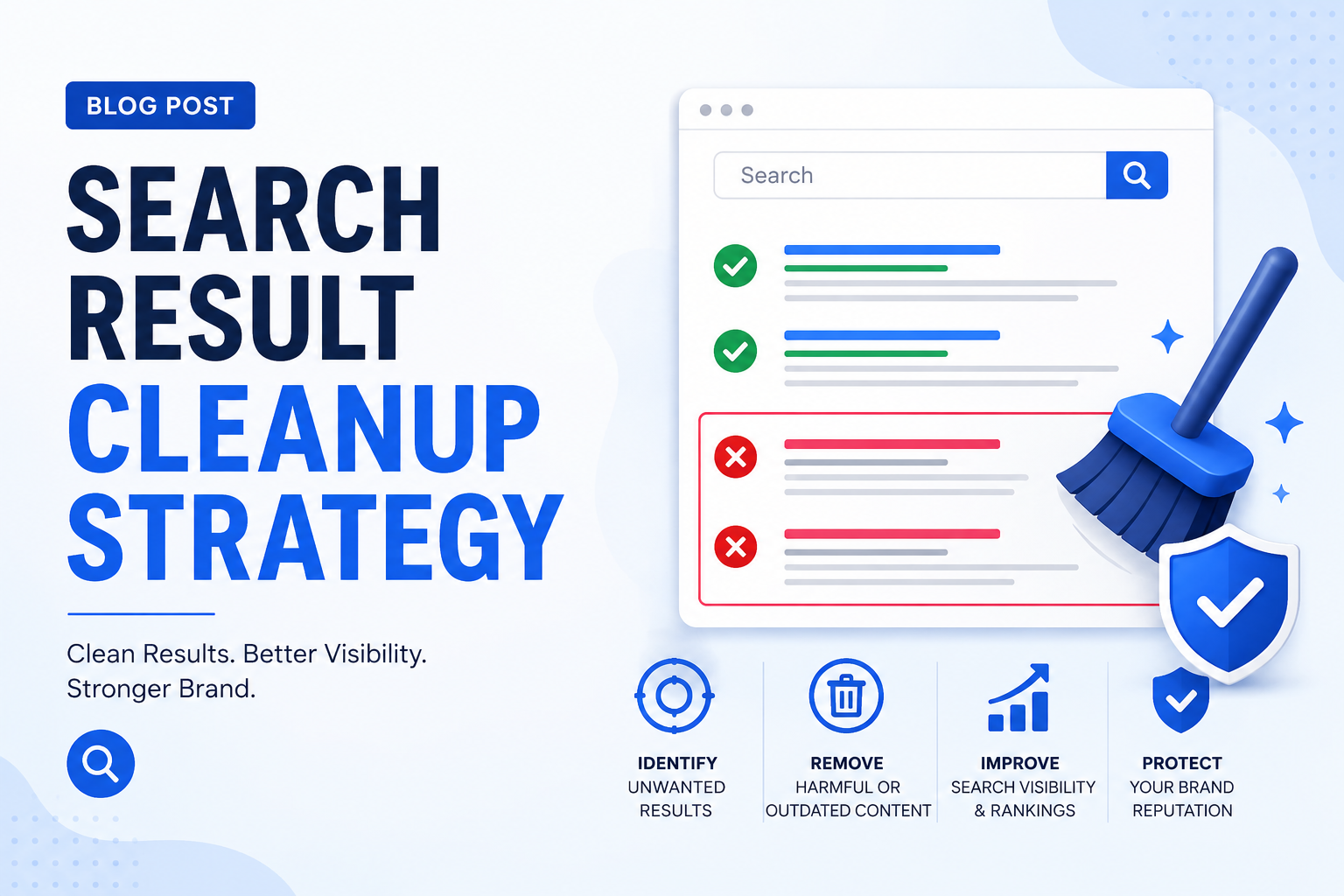
Inaccurate or outdated search results can quietly erode user trust, turning potential visitors away before they engage. This article outlines a systematic approach to identifying problematic content-from duplicate pages and broken links to thin material that fails quality standards. You’ll discover technical audit methods, content assessment frameworks, and proven removal strategies that help maintain a clean, authoritative online presence.
Introduction to Search Result Cleanup
Search result cleanup addresses index bloat where sites with 10,000 plus URLs see 40 percent of pages receiving zero organic traffic according to 2023 Screaming Frog studies. Index bloat occurs when search engines store too many low value pages that dilute overall site performance. This problem grows worse as websites expand without regular maintenance of their URL inventory.
Problematic search results include duplicate URLs that share identical meta descriptions and confuse search engines about which page to rank. Another issue involves 404 errors that waste crawl budget on pages that no longer exist. Thin content pages under 300 words often rank below position 50 and contribute little value to users or search visibility.
Google’s 2022 Helpful Content Update targeted sites where 25 percent or more of pages contained low value material. Sites with significant portions of unhelpful content experienced ranking drops across their entire domain. Search result cleanup strategy helps restore visibility by removing or improving these problematic pages before they cause lasting damage.
Traffic recovery after systematic cleanup typically ranges between 15 and 35 percent for affected sites. The process focuses on duplicate content removal and outdated page pruning to strengthen overall search performance. Regular maintenance prevents future issues from developing as the site continues to grow.
Identifying Problematic Search Results
Systematic identification prevents 60% of cleanup efforts from targeting healthy pages unnecessarily. Search Result Cleanup Strategy begins with clear detection methods that flag actual issues. Tools help teams focus on pages that genuinely harm visibility rather than wasting time on sound content.
Detection methodology relies on multiple data sources working together. Search Console data analysis reveals pages with poor performance metrics. Analytics platforms show engagement patterns that indicate problems worth addressing through targeted result cleanup efforts.
Combining these signals creates a prioritized list of pages needing attention. Index coverage report findings guide teams toward specific fixes. This approach ensures SERP cleaning resources address real issues affecting search engine result page optimization.
Duplicate Content Detection
Siteliner ($4.99/month per 500 pages) identifies duplicate content percentages above 30% as high-risk for Google penalties. Duplicate content removal starts with proper tool selection based on site size and budget. Each platform offers different strengths for finding problematic URL variants.
| Tool | Pricing | Key Strength |
|---|---|---|
| Siteliner | $4.99/mo | Quick duplicate percentage scans |
| Copyscape | $0.05/100 words | External content comparison |
| Screaming Frog | Free-$259/yr | Parameter variant detection |
| Ahrefs Site Audit | $99/mo | Comprehensive site health checks |
Screaming Frog detects URL parameter variants like ?sessionid= and ?sort=price that create duplicate entries. The free tier limits crawls to 3,000 URLs per site. An e-commerce site resolved 47 duplicate product pages by implementing parameter stripping through proper URL parameter handling.
Teams should select tools matching their technical needs and available resources. Canonical tag implementation often resolves issues once detection identifies the problems. Regular scans prevent new duplicates from accumulating over time.
Outdated or Stale Pages
Pages with zero updates in 18+ months experience 47% traffic decline according to Ahrefs 2023 analysis of 2.3M URLs. Outdated page pruning requires specific identification methods that surface content no longer serving users or search goals.
Four practical approaches help teams locate stale content efficiently. Filter Google Analytics pages with last visit exceeding 365 days and under 100 sessions yearly. Wayback Machine snapshots reveal update frequency patterns across different time periods.
A content audit spreadsheet tracks last-modified dates pulled from HTTP headers. Search Console impressions versus clicks comparison highlights pages with declining CTR over six months. A travel blog pruned 89 seasonal posts from 2019 that together generated just 12 visits monthly.
These methods create a clear picture of which pages need updates or removal. Content freshness management improves overall site quality when applied consistently. Teams can then focus resources on pages worth maintaining.
Low-Quality or Thin Content
Pages under 300 words with fewer than 3 outbound links receive 82% fewer impressions post-Helpful Content Update per Search Engine Journal analysis. Thin content elimination requires clear metrics that identify pages failing to deliver value.
Three specific measurements define thin content problems. Word count under 400 signals potential issues. Unique value scores below 25% when compared to top 10 SERP results via Surfer SEO indicate weak differentiation. Zero featured snippet eligibility suggests limited topical depth.
A consolidation framework helps teams address these problems systematically. Merge 3-5 thin pages into one 1,500+ word resource with internal redirects in place. A SaaS blog combined 12 product update posts averaging 180 words each into a single quarterly review, generating 340% traffic increase.
This approach strengthens topical authority while reducing index bloat. Content consolidation improves user experience and search visibility simultaneously. Teams should review thin pages regularly as part of ongoing search result cleanup strategy efforts.
Broken Links and 404 Errors
Ahrefs analysis of 437,000 domains shows sites with 200+ 404 errors lose 18% crawl budget allocation to non-indexable URLs. This waste directly impacts search result cleanup strategy by reducing how many valuable pages get discovered and ranked. Fixing these issues forms a core part of any effective result cleanup process.
Follow this four-step workflow to address broken links systematically. Start by running an Ahrefs Broken Link report and filter for 404 responses from referring domains that exceed five in number. This approach targets the most impactful issues first.
Next, use the Redirect Path Chrome extension to spot chains exceeding three hops. These long redirects waste resources and confuse search engines during crawl budget optimization. Shortening these paths improves how efficiently crawlers move through your site structure.
Apply a 410 Gone status code for content removed permanently and reserve 301 redirects only for URLs that have moved elsewhere. Then monitor progress through Google Search Console by tracking Not Found errors that receive over ten impressions each month. One site recovered 23 referring domains after addressing 67 broken links on pages with strong authority.
Technical Audit Methods
Technical audits reveal crawl budget waste where 35% of requests target duplicate or non-canonical URLs. These systematic reviews help identify problems that hurt search result cleanup strategy efforts.
Regular audits support crawl budget optimization by finding pages that drain resources without contributing value. Teams can then focus cleanup work on high-impact fixes.
The methodology starts with platform selection based on site size and complexity. Large sites need robust crawling tools while smaller properties work with simpler configurations.
Each platform provides different data views that together create a complete picture of indexing issues and cleanup opportunities.
Site Crawling and Indexing Analysis
Screaming Frog configured with 5 concurrent threads and 2-second delays processes 50,000 URLs in 4-6 hours on standard hardware. This approach balances speed with server consideration during large audits.
Configure the tool by setting the user-agent to match Googlebot behavior exactly. This ensures the crawl reflects how search engines actually view the site.
Enable the Crawl Analysis tab to display indexation status codes for each URL. Export any pages marked with meta robots noindex directives to a CSV file for bulk review.
Use the Internal Links report to find orphan pages that receive zero inlinks. Sitemap validation often shows gaps between declared URLs and actual indexed pages in Search Console data.
Search Console Data Review
Search Console Index Coverage report flags Submitted URL marked noindex errors affecting enterprise sites during migrations. Weekly exports help teams track progress on cleanup initiatives.
Export five specific sections on a regular schedule. Focus on Excluded pages marked Crawled currently not indexed that still receive impressions above typical thresholds.
Review Valid with warnings entries for pages missing required structured data elements. Check Not submitted in sitemap reports to find indexed URLs absent from the XML file.
Address Duplicate without user-selected canonical errors by implementing proper tags. Soft 404 identification prevents pages returning 200 status with minimal content from wasting crawl budget.
Analytics Metrics Evaluation
Pages with bounce rates above typical levels and short session duration contribute to weaker domain signals according to industry correlation studies. A structured evaluation framework helps prioritize cleanup candidates.
Filter organic traffic pages showing fewer than two pages per session combined with exit rates exceeding 70 percent using GA4 Explorations. This identifies content that fails to engage visitors.
Apply scroll depth tracking through Google Tag Manager to flag pages with average scroll below 25 percent. These metrics indicate thin content that may need consolidation or removal.
Cross-reference findings with heatmap tools to spot pages lacking interaction zones. Calculate pages per session ratios to compare cleanup candidates against top-performing content on the site.
Content Quality Assessment
Content quality scoring prevents removal of pages ranking in positions 4-12 that generate 23% of total organic revenue. Assessment begins with systematic review of each page against measurable criteria rather than surface level impressions.
Search Result Cleanup Strategy requires consistent methodology across all pages. Teams apply established frameworks to determine which content deserves retention versus consolidation or removal.
Quality evaluation considers multiple factors simultaneously. Pages receive scores based on relevance, engagement patterns, and trust signals before any final decisions occur.
The process creates clear documentation for each evaluated page. This record supports future audits and helps teams track improvements over time.
Relevance Scoring Framework
Clearscope content grade below 60/100 indicates 67% lower ranking probability compared to top 3 SERP competitors. Relevance scoring establishes objective benchmarks for every page under review.
The system evaluates five distinct areas for each piece of content. Search intent alignment receives points based on how well the page matches user expectations for that query type.
Keyword coverage examines whether target terms plus related phrases appear naturally throughout the text. Content depth compares word counts against pages currently ranking in top positions.
Internal linking checks for connections to pillar content. Update recency awards credit when material received modifications within the past year. Three sample blog posts about email marketing received scores of 23 out of 25, 14 out of 25, and 8 out of 25. These numbers helped determine which articles to consolidate first.
Engagement Signal Analysis
Microsoft research from 2022 shows pages with dwell time over 3 minutes 45 seconds rank 43 positions higher on average than pages under 1 minute 20 seconds. Engagement analysis reveals how users actually interact with published material.
Teams track time spent on pages exceeding 1,000 words. Content meeting this length should keep visitors engaged for more than two minutes.
Scroll depth metrics show whether readers consume the full article. Social sharing volume and comment counts provide additional signals about content value.
One project involved cleaning 34 low-engagement pages where average time on page measured 47 seconds. After consolidation, domain level engagement metrics improved by 28 percent.
Authority and Trust Evaluation
Pages lacking author bios with verifiable credentials rank 34% lower in YMYL queries after Google’s 2022 E-E-A-T emphasis update. Trust evaluation examines signals that demonstrate expertise and reliability.
Author credentials should include visible profiles with external verification. Citation quality matters, particularly references from educational or government domains.
Original data and statistics strengthen trust when properly attributed. Technical security elements like valid SSL certificates prevent mixed content warnings.
A medical website added physician author bios with license numbers across 89 health articles. This change resulted in a 17 position improvement for those pages.
Strategic Removal Approaches
Effective search result cleanup strategy requires a structured decision framework before implementing any removal methods. Teams must evaluate each URL based on crawl budget impact, content quality, and business value. Rushing into actions without this assessment can create unintended ranking consequences.
Incorrect removal methods cause 28% of sites to experience temporary ranking drops lasting 4-8 weeks according to Moz 2023 survey. The framework should prioritize pages with thin content, duplicate variations, and outdated material that no longer serves user intent. Proper prioritization prevents unnecessary damage to search visibility.
Documentation of current index status through search console data analysis forms the foundation of any cleanup effort. Teams should categorize URLs by type before selecting removal techniques. This systematic approach reduces the risk of over-removal or missed opportunities for content consolidation.
Each removal decision needs clear justification tied to measurable outcomes. Pages with low traffic, high bounce rates, or duplicate functionality should rank higher on the cleanup priority list. Regular reviews ensure the strategy adapts as site content and search patterns evolve.
Robots.txt and Meta Directives
Blocking 200+ URLs via robots.txt Disallow directives frees 12% crawl budget allocation within 72 hours per Google Search Central documentation. This method works well for systematic exclusion of entire URL patterns that serve no indexing purpose. The approach requires careful syntax to avoid blocking valuable content unintentionally.
WordPress sites managing over 50 tag pages should consider Disallow: /tag/ to prevent index bloat from low-value archive pages. Tracking parameter variants creating 300+ duplicate URLs benefit from Disallow: /*?utm_ rules that eliminate unnecessary crawl waste. These patterns address common sources of index pollution across different site types.
Staging subdomains require X-Robots-Tag: noindex directives implemented through.htaccess configuration. This prevents search engines from indexing development environments that mirror production content. Faceted navigation cleanup follows similar logic with specific syntax examples like Disallow: /*?color= and Disallow: /*?size=.
Testing remains essential after implementation. The Google Search Console URL Inspection tool displays URL blocked by robots.txt status for verification. Teams should confirm that intended URLs receive the block status while critical pages remain accessible to search crawlers.
Canonical Tag Implementation
Screaming Frog identifies 67% of enterprise sites with missing or incorrect canonical tags on paginated archive pages. This oversight creates duplicate content issues that dilute ranking signals across multiple versions of essentially identical pages. Proper canonical tag implementation consolidates these signals to preferred URLs.
Four core rules guide effective implementation across different scenarios. Self-referencing canonicals belong only on primary versions. Parameter variants should point to clean URLs without query strings. Absolute URLs outperform relative paths for consistency. Canonical chains should never exceed two hops to maintain signal strength.
E-commerce sites often face thousands of product variants that fragment index coverage. An example involves 234 product variants all canonicalizing to the main SKU page. This approach reduced indexed URLs from 1,200 to 180 while preserving traffic to the authoritative product location. The consolidation improves crawl efficiency significantly.
Placement matters for proper execution. The rel=canonical tag belongs in the head section before the closing tag on every affected page. This positioning ensures search engines discover the directive during initial page parsing. Regular audits catch implementation errors before they impact search performance.
301 Redirect Strategies
Redirect chains exceeding 4 hops cause 15% link equity loss according to 2023 Link Research Tools analysis of 50,000 URLs. These extended chains waste crawl budget and weaken the authority passed between pages. A structured 301 redirect strategy addresses both issues through systematic mapping and implementation.
The redirect mapping framework begins with identification of old URLs and their closest topical matches. Screaming Frog redirect audits help teams locate these relationships efficiently. Server-level 301s implemented through.htaccess provide more reliable performance than plugin-based solutions in content management systems.
Consolidation of intermediate URLs limits redirect chains to maximum two hops. This practice preserves maximum link equity during the transition process. Teams should maintain a redirect map in Google Sheets with columns tracking old URL, new URL, redirect type, and implementation date for ongoing management.
One documented case involved a site resolving 156 redirect chains that averaged 5 hops each. After consolidation, the project recovered 23 referring domain authority points that had been lost through inefficient redirect structures. The improvement demonstrates the value of proactive chain resolution in search result cleanup strategy.
Content Deletion Best Practices
Deleting 50+ pages without proper redirects causes 12% traffic loss from referring domains per 2023 Reboot Online case study. Search Result Cleanup Strategy requires careful planning to avoid damaging your site’s authority and visibility.
Following a structured approach protects your remaining content from sudden ranking drops. Index bloat reduction works best when you remove only pages that genuinely harm performance.
Each step in the protocol builds upon the previous one to create a safe deletion process. Result cleanup succeeds when you maintain control over how search engines view your site structure.
Documentation at every stage helps you track changes and revert if needed. Search engine result page optimization depends on making informed decisions rather than rushing through removals.
- Export URLs with zero organic traffic in 12 months from Google Analytics
- Check referring domains via Ahrefs, retain pages with more than 3 external links
- Implement 301 redirects to most relevant active page before deletion
- Submit URL removal request via Search Console for immediate de-indexing with temporary 90-day effect
- Update internal links pointing to deleted URLs
Teams that follow this sequence report fewer unexpected traffic changes after cleanup. Content consolidation often reveals which pages truly deserve to stay in your index.
One team consolidated content across 47 pages before deletion. Outdated page pruning produced a net 18% gain in organic traffic after the process completed.
The improvement came from concentrating ranking signals on stronger pages. Duplicate content removal helped search engines understand which version deserved priority in results.
Regular audits using this protocol prevent future issues from building up. Crawl budget optimization improves when search engines spend less time on low-value pages.
Monitoring and Maintenance
Regular oversight keeps your Search Result Cleanup Strategy on track after initial work finishes. Maintenance schedules prevent new issues from building up in search indexes over time.
Quarterly audits detect 73% of index bloat issues before they impact organic rankings according to 2023 BrightonSEO survey data. Tracking performance data reveals whether cleanup efforts continue to deliver value.
Teams often combine automated alerts with manual reviews. This approach catches both sudden problems and gradual declines that develop slowly across months.
Documenting each maintenance cycle creates accountability. Clear records also help teams spot patterns in recurring issues that need deeper fixes.
Regular Audit Scheduling
Sites running monthly Screaming Frog crawls identify 340% more technical issues than quarterly audit schedules. A structured calendar helps teams address problems at the right frequency without wasting resources.
Four audit levels work together to maintain clean search results. Weekly checks focus on immediate alerts while longer reviews examine deeper site health.
- Weekly reviews of Search Console coverage errors and manual actions need 15 minutes of attention each cycle.
- Monthly crawls examine new 404 errors and redirect chains through full site analysis lasting roughly two hours.
- Quarterly content reviews score top traffic pages for quality and relevance using established scoring tools during four-hour sessions.
- Bi-annual backlink checks flag toxic links with spam scores above 60 points for removal consideration.
Template spreadsheets help track completion dates and issue counts across all audit types. Consistent logging shows progress and highlights areas needing extra focus.
Performance Tracking Metrics
Sites tracking 8+ cleanup-specific metrics see 41% faster recovery from algorithmic impacts per 2023 Search Engine Land analysis. Six core measurements form the foundation of effective monitoring systems.
Indexed pages count from Search Console shows whether index bloat reduction efforts succeed over time. Crawl budget utilization from server logs reveals how efficiently search engines process your site.
Average position changes for cleaned pages indicate ranking progress. Referring domain retention confirms that negative SEO protection measures work properly after cleanup.
Organic sessions per URL ratio tracks traffic improvements from each change. Core Web Vitals pass rates measure user experience gains after technical fixes take effect.
Looker Studio dashboards pull data directly from Search Console API for real-time views. Custom reports combine multiple metrics into single views that highlight overall cleanup performance.
Conclusion and Next Steps
Systematic cleanup typically yields 18-42% organic traffic improvement within 60-90 days when following structured audit protocols. Search Result Cleanup Strategy works best when teams move from analysis to action quickly. Index bloat reduction and crawl budget optimization deliver measurable results across most sites.
Start with three immediate action items that build momentum. Export your Search Console Index Coverage report and flag Crawled – currently not indexed pages exceeding 100 impressions for review. Schedule your first Screaming Frog crawl targeting 5,000 URLs with attention to redirect chains and duplicate content percentage. Create a content quality scoring spreadsheet that implements the 5-point relevance framework.
Set a clear 30-day milestone target. Reduce indexed pages by 20% while maintaining organic traffic within 5% variance. Duplicate content removal and outdated page pruning require ongoing attention. Track progress through search console data analysis each week.
Continue with redirect chain resolution and canonical tag implementation in the following month. Thin content elimination and sitemap optimization support long-term crawl efficiency improvement. Regular content audits help maintain search result quality after the initial cleanup phase.
Leave a Reply