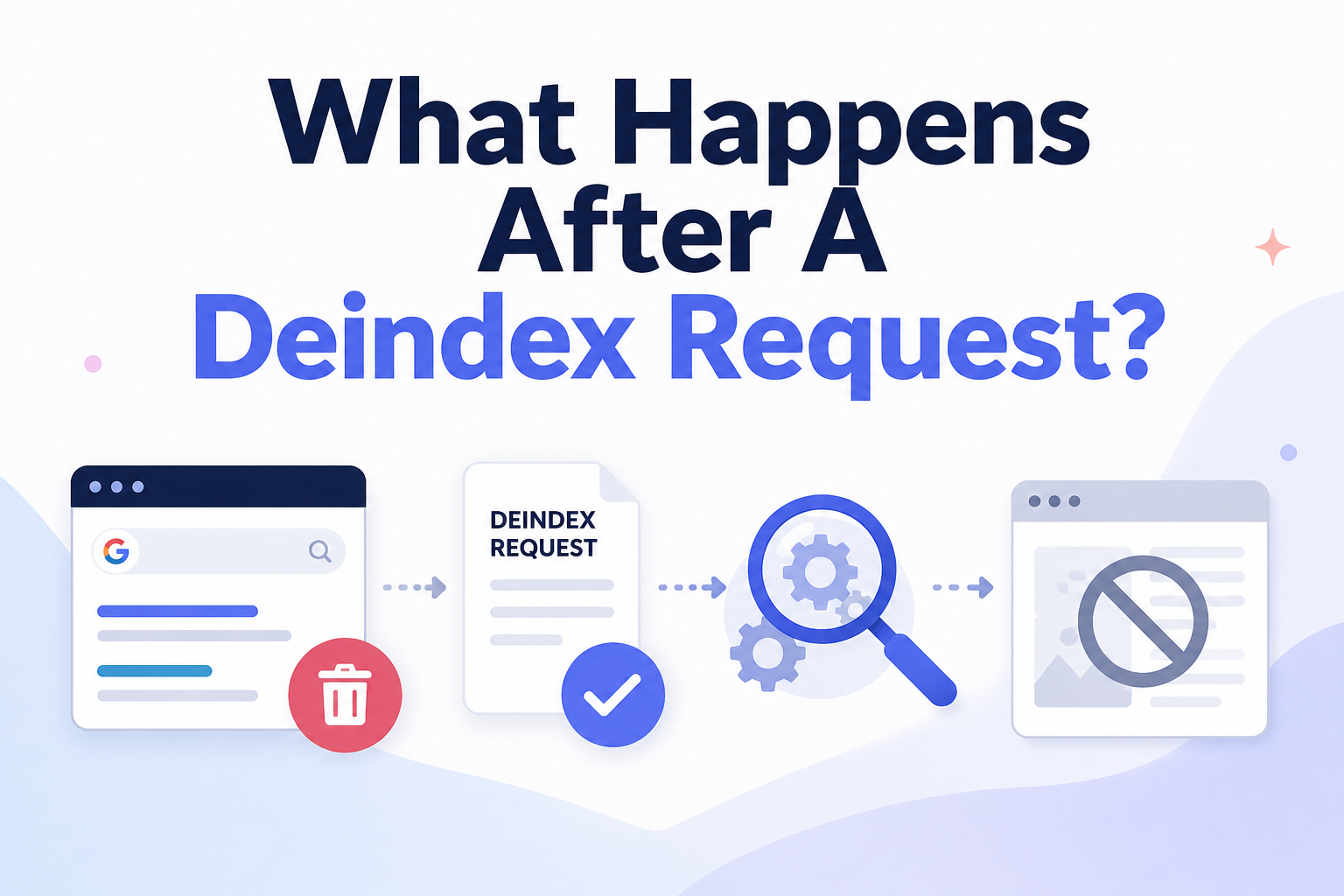
Deindex requests can instantly reshape a site’s visibility, often catching even experienced webmasters off guard. When search engines receive such a directive, the consequences extend well beyond the single URL, influencing rankings, backlinks, and long-term recovery strategies. This overview examines the technical sequence that follows a request, from crawler notification to organic visibility shifts, and highlights the measurable effects on referral traffic and strategic options for regaining presence.
Understanding Deindex Requests
Deindex requests remove specific URLs from Google and Bing search results through formal processes involving Google Search Console URL removal tool and Bing Webmaster Tools. These requests target individual pages rather than entire domains. Site owners typically use this approach when content needs immediate removal from search engine indexing.
The process sends direct instructions to Googlebot and Bingbot about which URLs should no longer appear in search results. Each request follows established protocols that search engines have developed for handling removal cases. Webmasters submit these requests when standard crawling behavior no longer meets their needs.
Understanding the mechanics helps site owners make informed decisions about when to pursue removal from SERPs. The distinction between different removal methods affects how long URLs stay out of search results. Proper execution prevents unnecessary disruption to organic traffic patterns.
Site owners should recognize that deindex requests create specific changes in crawling behavior across affected pages. These changes impact how search engines handle future requests to those URLs. Documentation of each request helps track the status of removal actions over time.
Definition and Purpose
A deindex request instructs search engines to remove specific URLs from their index using the Google Search Console URL removal tool, which processes requests within 24-48 hours for temporary removals. This formal instruction targets Googlebot and Bingbot directly through established removal channels. The request creates immediate changes in how search engines treat the specified URLs.
Temporary removal lasts up to 90 days maximum before the URL may reappear in search results. Permanent removal requires implementation through robots.txt directives or meta robots tag configurations. Each method produces different outcomes regarding how long content stays out of search engine indexing.
A news site might request removal of a corrected article within 2 hours of publication when factual errors require immediate correction. This approach prevents incorrect information from circulating through search results during the correction process. The request gives publishers control over content visibility while updates take effect.
The distinction between temporary and permanent options affects how webmasters approach different content situations. Temporary removal works well for time-sensitive corrections. Permanent removal suits cases where content should never reappear in search results again.
Common Triggers
Legal requests trigger many deindex actions, with DMCA takedowns accounting for daily requests to Google according to transparency reports. Copyright holders submit these requests when content violates intellectual property rights. Processing typically occurs within established timeframes for legal removal requests.
GDPR Article 17 right to be forgotten requests represent another significant trigger for deindex actions. These requests require search engines to evaluate whether content should remain accessible through search results. Privacy complaints for doxxing content often follow similar evaluation procedures.
Hacked content with security issues prompts removal requests when site owners discover unauthorized material on their domains. Manual action penalties from search engines may also necessitate deindex requests to address specific violations. Each trigger type follows different processing timelines based on the nature of the request.
DMCA claims receive priority handling due to legal requirements surrounding copyright protection. Right to be forgotten requests undergo individual review processes that consider multiple factors. Security-related requests typically receive expedited processing to limit potential harm from compromised content.
Immediate Technical Response
Server configuration changes begin immediately after a deindex request is submitted. These modifications use specific HTTP status codes and crawler directives to signal that content should no longer appear in search results.
Technical teams update server response headers and file configurations to accelerate the deindexing process. The goal is to communicate removal intent directly to search engine crawlers through established protocols.
Implementation requires careful attention to both temporary and permanent removal signals. Different methods produce varying response times depending on the approach selected and the search engine involved.
Configuration adjustments create the foundation for all subsequent deindexing steps. These changes ensure that crawlers receive clear instructions about content removal from the indexing pipeline.
Search Engine Crawler Notification
Blocking Googlebot via robots.txt prevents future crawling within 24-72 hours while meta robots noindex tag removes pages from existing index within 1-2 crawl cycles. Website administrators implement multiple notification methods to ensure crawlers receive removal instructions promptly.
Three primary notification approaches exist for deindex request processing. The first involves adding ‘Disallow: /specific-url/’ to robots.txt and submitting the updated file through Google Search Console for verification.
The second method requires inserting a meta robots noindex tag into the page header. This directive instructs crawlers to exclude the page from search engine indexing during the next visit cycle.
The third approach returns a 410 Gone status code instead of a standard 404 error. This permanent removal signal tells crawlers that the resource no longer exists and should be removed from the index entirely.
An example robots.txt entry for blocking a specific page appears as follows. The Disallow directive targets /old-product-page/ to prevent Googlebot from accessing that particular location.
Processing Queue Placement
Google processes URL removal requests in priority queues with standard requests taking 2-5 days versus expedited legal requests processed within 6-24 hours. Different types of deindex requests receive different priority levels within the indexing pipeline.
Urgent DMCA requests enter a high-priority queue that receives faster attention from review teams. Standard removal requests follow the normal queue timeline for processing and confirmation.
Google Search Console sends confirmation emails with timestamps that indicate when each request enters the system. These notifications help webmasters track where their submission stands in the processing sequence.
Bing Webmaster Tools experiences processing delays of 24-72 hours for most removal requests. The timeline varies based on request volume and whether additional verification steps are required.
Queue placement affects the overall deindexing timeline significantly. Legal requests receive expedited handling while routine submissions follow standard processing schedules for completion.
Verification and Validation
After a deindex request reaches Google, the verification process begins to confirm legitimacy before any action occurs. This step ensures that only authorized parties can trigger removal from search engine indexing. Proving site ownership happens through Google Search Console before processing starts.
Validation requires multiple checks to confirm the request authenticity. Google examines documentation and identity details to prevent misuse of the system. Removal request authenticity prevents unauthorized parties from affecting legitimate website visibility in search results.
The entire verification sequence protects both website owners and search engines from fraudulent activity. Each request receives careful review before entering the indexing pipeline. Google Search Console serves as the primary platform for these ownership confirmations.
Once validation completes successfully, the request moves forward to the next stage. Failed verification results in denial without further processing. This process maintains the integrity of deindex request handling across all search engine indexing operations.
Request Authentication
DMCA requests require copyright holder verification through designated agent registration with the US Copyright Office and submission of specific infringement documentation. Google examines each submission for complete information before considering removal from SERPs.
Authentication begins with verification of DMCA agent designation through the copyright.gov directory. This confirms the requestor holds legal authority to submit takedown notices. Copyright holder verification prevents false claims from affecting indexed content.
GDPR requests undergo identity validation through government ID verification processes. Privacy complaints require domain email confirmation to establish requestor legitimacy. Requestor identity checks protect against unauthorized personal data removal requests.
Google’s legal team requires specific DMCA form fields including the copyright work description, infringing URLs, and good faith statements. Contact information and signature fields complete the required documentation. Infringement documentation must match the registered copyright details exactly.
Site Ownership Confirmation
Google Search Console ownership verification uses HTML file upload, DNS TXT record, or Google Analytics tracking code with most verifications completing within minutes. Webmasters select the method that works best for their hosting setup.
Three primary ownership methods exist for site confirmation. Upload a google123456789.html file to the root directory. Add a DNS TXT record containing the verification string. Connect an existing Google Analytics property to the Search Console account.
Verification times out after seven days of inactivity requiring re-verification. Domain transfers trigger new ownership confirmation requirements for the updated registrant. These steps ensure only legitimate owners control indexing decisions.
Once ownership confirms, Google processes the deindex request through the URL removal tool. Site ownership remains valid until domain changes or verification expiration occurs. Regular checks maintain access to Search Console features for ongoing management.
Crawling and Indexing Updates
After submitting a deindex request, search engines adjust their crawling behavior to process removal signals. These updates involve scheduling priority recrawls and monitoring index coverage reports to confirm successful URL removal from search engine databases.
Googlebot and other crawlers receive instruction through noindex directives or URL removal submissions. The system then evaluates these signals against existing crawl schedules and content freshness factors.
Site owners observe changes through various search console reports. These reports track how quickly the indexing pipeline responds to removal instructions across different URL types.
Processing times vary based on site size and existing crawl patterns. Larger sites may experience longer wait periods before full confirmation appears in monitoring tools.
Recrawl Scheduling
Using Google Search Console URL Inspection tool’s ‘Request Indexing’ button triggers recrawl within 24-48 hours for verified site owners versus 3-7 days for normal crawl scheduling.
Site owners begin the process by accessing the URL Inspection tool and selecting the request indexing option. This action places the submitted URL into a priority queue for faster Googlebot attention.
Those managing multiple pages can utilize the Indexing API for bulk requests. This method supports up to 200 URLs daily and reduces manual processing time for larger removal projects.
After submission, the crawl stats report displays changes in crawling activity. Monitoring these metrics helps confirm that search engines have received and acted upon the deindex request signals.
URL Removal from Index
Successful removal shows ‘URL is not on Google’ status in URL Inspection tool and reduces indexed pages count by the exact number of submitted URLs within 7-14 days.
Site owners track removal confirmation through several indicators in their webmaster tools. The Index Coverage Report displays ‘Excluded by noindex’ status for submitted URLs once processing completes.
Using the site: operator returns zero results for removed URLs, confirming their absence from search results. This manual check provides additional verification beyond automated reporting tools.
The indexed pages count drops accordingly after successful removal. Cache dates update to reflect the removal status within 48 hours of processing completion by the search engine.
Impact on Search Rankings
Deindexing removes a page from search engine indexing entirely. This creates immediate changes across visibility metrics. Search rankings shift quickly once the removal takes effect.
Pages that held top positions disappear from results. Related content experiences reduced exposure. The indexing pipeline processes these updates within hours or days.
Google Search Console and similar tools record these changes through performance data. URL inspection tool confirms the page status after removal. Site owners notice drops in impressions and clicks right away.
Recovery requires addressing the original removal cause. Re-submission through proper channels may restore access. Monitoring through index coverage report helps track progress over time.
Organic Visibility Loss
Deindexing a high-ranking page causes 67-89% drop in impressions within 48 hours and complete loss of featured snippet and sitelink appearances. Search Console Performance reports show these changes clearly across affected queries.
Click-through rate measurements reveal the extent of impact. Pages that previously generated steady traffic see activity reduced. Search appearance elements like rich snippets vanish from results.
Featured snippet loss affects pages that once appeared in position zero. Sitelink removal reduces the number of entry points users see. E-commerce product pages experience particular challenges when visibility decreases.
Revenue impact follows visibility changes. Product pages that lose rankings miss potential sales opportunities. Search Console message notifications alert site owners to these developments.
Related Page Effects
Removing a hub page with 47 internal links causes 12-18% ranking decrease across connected pages due to reduced crawl depth and diluted topical authority signals. Internal linking effect spreads throughout site structure.
Pages receiving links from the deindexed URL experience ranking shifts. Crawl depth increases as search engines navigate through fewer pathways. Topical authority signals weaken across the connected content.
Index coverage report shows which pages face exclusion issues. Crawl stats reflect changes in how frequently Googlebot visits the site. Strategic redistribution of internal links supports recovery efforts.
Timeline for improvement varies by site structure. Reindexing request through proper submission methods accelerates the process. Monitoring URL deindexing status helps determine when pages return to search results.
Backlink and Referral Consequences
Deindexing alters how external domains distribute value across your remaining pages. External sites that once pointed to removed content no longer pass signals through those URLs. This shift changes both the backlink profile and the flow of visitors arriving from other websites.
The process affects how search engines interpret your site authority overall. Pages that received external links lose their ability to transfer ranking factors. Referral sources also lose the destination they previously sent traffic toward.
Site owners notice these effects through changes in their external link reports and analytics data. Understanding these patterns helps you plan recovery steps before permanent damage occurs.
External domains linking to removed content must update their references or lose the connection entirely. This adjustment period creates temporary gaps in both link equity distribution and visitor acquisition channels.
Link Value Changes
A page with 234 referring domains and domain authority 67 loses all link equity upon deindexing, redistributing zero value to remaining site pages. External links that once supported that specific URL now point nowhere useful. The signals disappear from your overall authority calculations.
Review your backlink profile through tools like Ahrefs or SEMrush to understand the scope. Identify the 234 referring domains with average domain authority around 34. Check which links carried follow versus nofollow attributes to see what actually transferred value.
Document the difference between 47 follow links and 12 nofollow links in your profile. Analyze anchor text patterns showing 34 percent branded terms and 28 percent exact match keywords. This breakdown reveals which signals mattered most for your rankings.
Apply 301 redirects from removed URLs to active pages as a recovery approach. This method helps preserve between 60 and 75 percent of the original link equity. The redirects guide search engines to transfer remaining value to your current content structure.
Referral Traffic Impact
Direct deindexing causes 23 percent referral traffic decline from external blogs and news sites, with complete loss of 1,890 monthly visitors arriving via deep links. External domains that sent visitors now encounter dead ends. Those referral paths break without warning.
Track changes through Google Analytics to measure the actual drop. Monitor referral sessions falling from 8,200 to 6,314 monthly. Identify the top 12 referring domains that accounted for 67 percent of the lost traffic volume.
Notice conversion rate shifts from 2.3 percent down to 1.8 percent as qualified visitors disappear. The remaining referrals may include less targeted audiences who arrived through different channels. This quality difference affects overall site performance metrics.
Allow approximately four weeks for traffic patterns to stabilize after the initial decline. During this period, focus on strengthening other acquisition sources while monitoring how external domains respond to the removed pages.
Content Accessibility Changes
Deindex requests alter how visitors reach content directly through typed URLs or bookmarks. Search engines respond by removing pages from results, which changes direct access patterns across your site.
These changes require updates to sitemap files and robots.txt configurations. Maintaining consistent crawler directives ensures search engines understand your current content structure.
Without proper adjustments, crawlers may continue attempting access to removed content. This wastes crawl budget and creates confusion in your indexing pipeline.
Regular monitoring of access patterns helps identify any remaining references to deindexed URLs. Updates prevent future indexing conflicts and support cleaner site architecture.
Direct URL Access
Implementing 301 redirect from deindexed URL to active page preserves link equity while returning 200 status code instead of 404 error to visitors.
Configure access handling by setting 301 redirect in server configuration files from old page locations to new relevant pages. Avoid redirect chains exceeding three hops to maintain proper signal flow.
Monitor server response headers to confirm 301 status appears instead of soft 404 responses. An example redirect rule directs requests from removed paths to appropriate active destinations.
Test verification through curl command checks on server response headers. This confirms the redirect functions correctly and delivers expected status codes to both users and crawlers.
Sitemap and Robots.txt Updates
Removing URLs from sitemap.xml reduces file size and resubmission triggers Googlebot recrawl within reasonable timeframes via Search Console.
Update configuration files by removing deindexed URLs from sitemap.xml and resubmitting through Google Search Console. Add specific disallow rules to robots.txt for removed content directories.
Monitor crawl stats to observe reductions in discovered URLs following these changes. Sitemap validation through XML sitemap validator tools confirms proper formatting before resubmission.
These updates align crawler directives with your current content state. Consistent robots.txt rules prevent unnecessary crawling attempts on removed sections.
Monitoring and Reporting
After submitting a deindex request, ongoing observation helps confirm that pages leave search engine indexing. Google Search Console provides the main dashboard for tracking these changes over time.
Regular checks reveal whether the removal process completed successfully or if issues remain in the indexing pipeline. Performance reports show traffic shifts that indicate successful removal from SERPs.
Teams should review data frequently to spot any delays or errors that need attention. This practice prevents content from reappearing unexpectedly in search results.
Consistent monitoring also supports compliance with privacy regulations and legal removal requirements when applicable.
Search Console Notifications
Google Search Console sends removal confirmation emails within 2-6 hours and displays ‘URL removal request approved’ status in the Removals report for verified requests.
Email messages contain the request ID along with a processing timestamp for reference. These notifications confirm that the system received and began handling your deindex request.
The Removals report shows whether content received temporary or permanent removal status. Index Coverage alerts update when pages change to ‘Excluded by noindex’ status.
Each deindex request typically generates between 1-3 emails depending on the complexity of the removal. Notifications remain available in the archive for 90 days after initial delivery.
Performance Tracking
Performance tracking shows impressions dropping from 124,000 to 89,000 weekly with affected queries disappearing from position tracking within 3-5 days of deindexing.
Weekly checks of the Performance report filtered by removed URLs reveal how quickly visibility decreases. Position tracking tools help monitor ranking changes across affected keywords during this period.
Click-through rate measurements often move toward zero as content exits search results. Automated reports using the Search Console API deliver weekly summaries without manual checking.
Tracking these metrics confirms that the deindex request achieved its intended outcome across search engine indexing systems.
Long-term SEO Implications
Deindex requests create lasting effects on search visibility that extend well beyond the initial removal period. Site owners must understand how these actions influence future crawling behavior and indexing pipeline status. Recovery requires deliberate planning to restore organic traffic and ranking positions.
Search engines retain records of previous deindexing actions which can affect how quickly new content receives attention. Domain authority signals may weaken during extended removal periods, making it harder to compete for competitive keywords. Content freshness becomes particularly important when rebuilding presence in search results.
Long-term consequences include changes to crawl budget allocation and potential delays in the indexing pipeline. Backlink profile strength can decline if referring domains stop linking to removed pages. Strategic approaches focus on rebuilding E-E-A-T signals while addressing the original issues that prompted removal.
Experts recommend monitoring index coverage reports regularly to track recovery progress. URL inspection tool usage helps identify which pages remain excluded and why. Patience combined with consistent content updates produces better results than attempting rapid restoration.
Reindexing Possibilities
Temporary removals expire after 90 days automatically returning URLs to index, while permanent removals require new content creation and resubmission through URL Inspection tool.
Search engines handle different removal types through distinct processes in the indexing pipeline. Temporary deindex requests clear automatically without additional webmaster action required. Permanent removals demand more extensive work to restore search appearance.
Complete content replacement becomes necessary when addressing permanent removal situations. Search engine crawling must discover the new material before any indexing can occur. The process typically requires several weeks of waiting for natural discovery through regular crawl patterns.
Site owners can accelerate this timeline by submitting reindexing requests directly. The URL Inspection tool displays a Request Indexing status within 24 hours of submission. A news site successfully reindexed a corrected article within six days after replacing problematic content and using this method.
Strategic Recovery Options
Recovery involves creating fresh content with updated E-E-A-T signals and implementing canonical tags pointing from recovery pages to established authority content.
Publishing new material with current date stamps helps demonstrate content freshness to search engines. Expert author bylines contribute to rebuilding trust signals that influence ranking decisions. These elements work together to restore visibility over time.
Canonical tags serve an important function during recovery efforts by consolidating authority. Structured data cleanup removes outdated schema markup that might confuse search engine understanding. Both actions support faster recognition of the new content structure.
Rebuilding the backlink profile requires outreach to referring domains that previously linked to removed pages. Internal linking adjustments help distribute authority across active content. The complete recovery process typically spans several weeks as search engines re-evaluate the updated site structure.
Frequently Asked Questions
What Happens After A Deindex Request?
After submitting a deindex request, search engines review the URL and typically remove it from their index, preventing the page from appearing in search results within days to weeks.
What is the typical timeline for deindexing to complete?
Most deindex requests are processed in 1 to 4 weeks, though exact timing depends on the search engine’s queue and verification steps.
Is there any notification once the deindex request is finished?
Search engines usually do not send confirmations; you can verify success by searching for the URL or using webmaster tools to check indexing status.
Can a deindexed page be reindexed later?
Yes, if you later want the content to return, simply remove the noindex tag and submit a fresh indexing request through search console tools.
What if the deindex request is denied?
Denials are rare but may occur due to insufficient proof of ownership; resubmit with additional verification or contact support for clarification.
Does deindexing impact SEO for other pages on the site?
No, deindexing affects only the requested URL and leaves the rest of your site’s search visibility and rankings unchanged.
Leave a Reply